Posts

Showing posts with the label brain development

Nurturing Young Minds: The Crucial Role of Parents and Educators in Children’s Language Development

Image
Language development in children is a fascinating journey that shapes their ability to communicate, understand the world around them, and build relationships. As parents and educators, our role in fostering this development is crucial. In this blog post, we will explore the importance of children’s language development, study into theories surrounding it, examine research results and recommendations, and offer practical recommendations for parents and early childhood educators. Understanding Language Development Language development begins at birth and progresses rapidly in the early years of life. Children learn language through exposure, interaction, and imitation. They start by babbling, and making sounds, and eventually, through observation and practice, they acquire vocabulary, grammar, and communication skills. Theories of Language Development Several theories shed light on how children acquire language. Jean Piaget’s Theory of Cognitive Development, also known as the Development...

Holistic development in early childhood

Image
As parents, early childhood educators, and caregivers we wish with all our hearts to see our children thriving and developing healthful in all ages, aspects, and stages of their lives. We want our work wonderfully done! That's when we refer to the holistic development approach. The holistic development approach means that we focus on all aspects of the development of children, not just their academic performance. The holistic development of a child refers to the overall growth and progress of a child in various aspects of their life, including physical, cognitive, emotional, social, and moral domains. It recognizes that children are complex beings, and their development is interconnected and interdependent across these different areas. Areas connected to the holistic development The areas connected to holistic development are described separately for understanding, but it is essential to keep thinking about the child as a whole and how the experiences that encourage development a...

Sensory stimulation in babies and young children: Promoting learning

Image
Sensory stimulation connects the use of the senses of visual (seeing), auditory (hearing), tactile (touching), gustatory (tasting), and olfactory (smelling). The use of the senses has been demonstrated that promote and encourage learning, brain development, and growth during the early years. The lack of sensory stimulation can be detrimental to the development of babies and young children. This damage persists during adulthood. There are a lot of activities that stimulate the senses creating brain connections that are discussed and recommended in this blog post. Sensory stimulation and sensory play demand to be done constantly as the child develops and grows to obtain the best benefit in the short and long term. What is sensory stimulation? Sensory stimulation is the input one person receives when one or more of the senses are influenced, activated, or as the concept itself, stimulated. Sensory stimulation theory states that effective learning appears when the senses are stimulated...

The role of nutrition in brain development in early years

Image
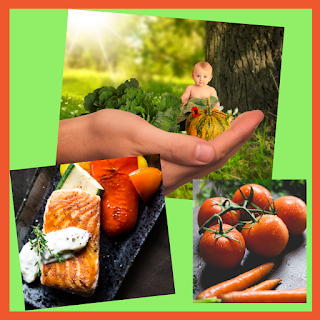
Nutrition is an essential component in brain development, especially during pregnancy and during the early years, which is the time of most rapid brain formation and development of cognitive, physical, and socio-emotional skills. But it is also important throughout the lifespan. However, deficiencies in nutrition during pregnancy and early years may produce damage to these skills and development affecting school productivity and adulthood. Nutrition deficiencies also depend on factors, like experiences and input from the environment, the timing of nutrient deprivation, the degree of nutrient deficiency, and the possibility of recovery. Brain formation and development in early stages About 22 days after conception, the neural plate and neural tube begin to form, which later becomes the brain and spinal cord. Adequate nutrition including nutrients like folic acid, copper, and vitamin A is crucial in this formation and development. Approximately seven weeks later, cell division creates ne...

Encouraging creative activities for young children

Image
During this pandemic time due to COVID-19, having our children at home and looking constantly for on-hand activities to keep them busy and entertained and at the same time contributing to their development and learning is not an easy task. Many parents may feel stressed, tired, and maybe guilty because of these feelings. But you are not alone. There are a lot of parents and caregivers feeling the same as you are! Electronic devices are one of the most used tools during this time not just for gaming and entertainment, but for the new modalities in education, referring to virtual, online, and remote learning. Experts urge parents and caregivers to limit the usage hours of phones, computers, tablets, and video games because of the increment in sedentary behavior, health conditions, and obesity. Even, though it's recommended to limit the usage to a maximum of two hours per day for children and teens, for young children, ages 2 to 5, the recommended limit is one hour per day. From the h...

Addressing diversity in early childhood settings

Image
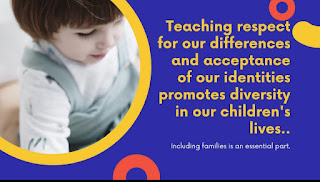
Teaching respect for our differences and acceptance of our identities promotes diversity in our children's lives. Including families is an essential part to be successful in supporting children to accept, understand, and value our diverse world.

The play: supporting child and brain development

Image
In the last decades, we saw radical changes in kindergarten classrooms. Classroom activities are focusing more on literacy and math than learning through play, exploration, body movements, and using their imagination. This results in children linked in an early childhood curriculum far from supporting their healthy development, adding an increment of academic pressure and stress.